In this episode of RoyOnRescue, Roy Shaw visits the new 2010 CPR guideline update regarding activation of Emergency Medical Services and calling a code. Be sure to watch this episode to get the latest guideline release covering this subject.
Monthly Archives: October 2010
2010 CPR Updates -Compression Only CPR
Hello Everyone,
I’ve been debating on trying to post this before the weekend and now I’m sure I should. It’s not going to be short but I will try and get too the point.
There is a lot of talk going on about Compression Only CPR and how it rivals traditional CPR. I’m going to shed some light on the technique and try to sneak in a bit of synthesized science to help understand what it is and what it’s not. Hold on to your seat…hear we go!
2010 CPR Update Series – 911 and Dispatcher Changes
This 2010 CPR update training, I take a look at the 911 and Dispatch Changes. The biggest takeaway from this change is a simplification for the rescuer who is calling 911. The dispatcher is going to ask a series of questions to determine if the victim is breathing or “Not”. Not, can mean not breathing at all, or could mean not breathing normally(Agonal or gasping). Upon this finding as well as deciding if this victim is in cardiac arrest due to asphyxia or medical condition like cardiac disease will change the directives the dispatcher will give to the rescuer.
Watch this RoyOnRescue video to help understand the difference between 2005 and 2010 and why the change was made.
2010 Latest CPR Guidelines Released!
Roy Shaw, EMT-Paramedic and Instructor Trainer for ProTrainings.com has embarked on a quest to cover all of the important updates and topics related to the new 2010 ECC/ILCOR and American Heart Association updates which are in the process of being released and communicated via email, news, TV, blogs, twitter, Facebook and any other means of communication you can think of. Only one problem, many CPR instructors haven’t been told how to handle them yet! So after many emails, phone calls and questions, Roy Shaw has decided to work through the updates topic by topic and give the old and new standards, his take on them and then open them up for converstaion. So if you’re looking for some insight on how to handle the 2010 CPR changes, look no further.
Impact Sports and Rib Injuries!
Hello Everyone,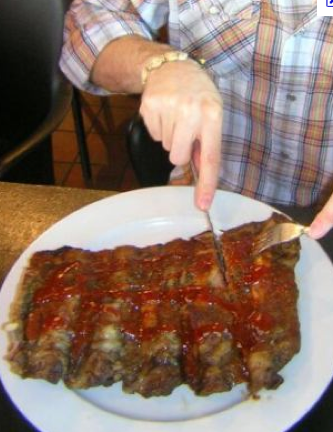
In this royonrescue blog entry I wanted to address a particularly familiar problem associated with sports of all kinds but especially common with high impact sports and the new uptick of people getting into Martial Arts, Judo, Brazillian Jiu-Jitsu and MMA. For anyone who has been involved in any of these sports you know that it takes a lot of time, energy, work, determination and discipline to get to a point where you’re not just trying to get into shape but trying to improve your game. All the months and years of training hard, working out and testing your skills all to have them come to a screeching hault when your fell a rib “pop”. This term “popped a rib” is coined for the explanation of any type of injury having to do with the rib cage but is mostly found in the anterior or posterior region of the lower rib cage, ie. floating or hanging ribs. These are the ribs that are low and out to the sides of the abdominal region. They are called hanging or floating due to the fact that they are not connected to the sternum and only the spine. Because of this feature they are usually very flexible and can take a lot of pressure. When a person gets hit hard, leans over a railing wrongly or maybe takes a punch, kick or a knee on stomach from another sparring partner or teammate, they can damage the rib causing everything from dull to severe pain.
Now when I say from dull to severe I mean from the scale of pain everthing from .5-10 on the scale. Some of this depends on the severity of the rib fracture and some of it depends on if it is an actual rib fracture or if it’s a muscle or cartilage injury. The pain can be only sensitive to pressure or additional bumps or it can hurt when a person breaths but either way, when the injury is present it definitely makes itself known and can really screw up sleep, let alone your normal training routine.
Because I couldn’t find a lot of good advice or explanation all in one location, I thought I’d add my two cents to the whole thing and maybe help someone out.
Question: Is a rib fracture dangerous?
RoyOnRescue Reply: It is not usually a dangerous injury unless the rib is fractured completely and sharp bone end punctures an organ or muscle. If the rib is broken from a wrong movement it is probably not as potentially dangerous as when it’s broken from a severe force. Severe force strong enough to break a rib high up in the chest cavity may be strong enough to cause trauma to lungs, heart or other parts of the body. At it’s worse here’s what trauma.org says about rib fractures: Fractures of the lower ribs may be associated with diaphragmatic tears and spleen or liver injuries. Injuries to upper ribs are less commonly associated with injuries to adjacent great vessels. This is especially true of a first rib fracture, which requires a significant amount of force to break and indicates a major energy transfer. A fracture of the first rib should prompt a careful search for other injuries. Note also that the rib cage and sternum provide a significant amount of stability to the thoracic spine. Severe disruption of this ‘fourth column’ may convert what would otherwise be a stable thoracic spine fracture into an unstable one.(http://www.trauma.org/index.php/main/article/399/)Normally the biggest complication is that it impairs breathing deeply which can lead to respiratory infections or pneumonia and it’s hard to rest lying on your side or back depending on the location of the injury.
Question: Do I Have to Stop Training?
RoyOnRescue Reply: Do you want the true answer or the one I wanted to hear when I hurt my ribs the last time? Either way, I’m going to give it to you as straight forward as possible. Usually there isn’t much therapy for a broken/bruised or strained rib injury. If it hurts or makes it hurt worse with activity, stop the activity and give the injury time to heal. Usually 6-8 weeks has been the consensus from my research. If you can tolerate the workout without reinjury then you may be able to keep training. If it seems to make it worse and you are re-injuring the rib, you may need to stop and give it the time required. If in doubt, talk to your medical professional for advice. As for me, I train as long as I can tolerate it and try to not re-injure the same problem injury. If I do, I take time off.
Question: How Can I Treat The Inury to Help Healing?
RoyOnRescue Reply: Most research is going to tell you to rest as much as you can, drink lots of water and stay hydrated and try not to re-injure the same site. Cold packs applied to the area being careful not to place directly against the skin will help to decrease swelling and help aid the healing circulation. Some say that an ace wrap around the injured area of the chest may help support the area to decrease movement and pain. And of course most people will take some form of analgesic or non-steroidal anti-inflammatory medicine like Aspirin or Ibuprofen. Please refer to your doctor for prescriptions that would apply to you and be careful of allergies.
Question: How Do I Know If I Need To See A Doctor?
RoyOnRescue Reply: If you have any problem with Airway, Breathing or Circulation, Shock or Shock symptoms, internal pain that is increasing with or without moving, numbness or unable to move any part of your body, headache that is increasing or not going away, chest pain that is severe or for any reason you feel like you should see a doctor, it is always a good idea to be seen. Better to be safe than sorry and find out that you ignored an internal injury with severe bleeding or other complications. If the rib injury is causing any life threatening problems, call 911 immediately.
So to all my fellow rib injuries out there, I hope you feel better sooner than 6-8 days let alone weeks, don’t do what ever you did the first time to get hurt and get well soon.
I hope this helped and if you have any other questions or comments for RoyOnRescue.com be sure to email them to: royonrescue@gmail.com
Until next time, go fourth and rescue,
Best Wishes,
Roy
RoyOnRescue.com
royonrescue@gmail.com
8 Dead, More Dying, Even More Injured 2 Part Episode
Hello Everyone,
This question came in from my friends out in California.(I’m not sure if they wanted to be named and I haven’t asked them yet.) They had many patients and only their small team of volunteer rescuers without transportation services to organize a serious mass casualty incident.
They were on scene first when an all terrain racing vehicle left one of the desert roads and launched into a crowd of spectators. There were many killed, many more injured and to top it all off, no response from EMS transportation services for more than an hour! The team of volunteers had to work fast and hard to help organize absolute chaos. They were wondering if I could share my opinion on how to organize bystanders and volunteers during a situation like this. In this RoyOnRescue episode I give some of my ideas combined with advice from several of my colleagues working in dispatch, quality assurance, risk management and EMS response. My answer to how to organize volunteers and bystanders to help in a triage situation where there are mass casualties took a total of two videos in order to fit them onto YouTube. There’s a lot covered here but I really have only scratched the surface of a very important topic. I hope it helps. If you need me to spin off onto one given section of this subject and cover it more in depth, please email me at: RoyOnRescue@gmail.com.
Best Wishes,
Roy
RoyOnRescue.com
Part 1
Part 2
CPR on Airbeds and Shocking a PaceMaker
We had a student write in about different situations that can make it really difficult to do CPR and use an AED on someone. I thought I’d include the scenarios and then give a little help on some ways to make it all go as well as possible.
royonrescue@gmail.com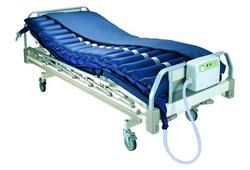
The person writes: I have patients in oversized beds, usually air beds. I am a nurse in a nursing home and have this discussion frequently with my CNA staff so they know what to do. You’d be surprised how many licensed staff attempt CPR in a bed. Question, can an AED be used on a person with a pacemaker or indwelling defibrillator?
-Help?
Well, these two different situations do throw a small curve ball but nothing that we can’t work through together. First, let’s talk about the airbeds. In the medical field, we are constantly finding ways to decrease bed sores and pneumatic air beds are one of them. When a patient needs CPR compressions there is a golden rule that shoulds be followed. Chest compressions work best on a hard flat surfaces. This does not mean that the patient must be moved to a different surface everytime, but it does mean that the surface must be hard/stiff and flat in order to maximize the depth and consistency of the chest compressions.
With airbeds, we usually see them built with a deflate or CPR button? Or a way to deflate them quickly. Even the air/sand beds have this feature so make yourself familiar with it and you will instantly have that hard flat surface we are talking about. If it is a normal hospital or patient bed and the person is not able to be moved safely to the floor, we should have quick access to a CPR board or a back board which will usually stiffen the surface enough for good compression depth. It’s always a good idea to practice all of these steps to make sure you know just what you are going to do if the emergency arises.
Secondly, Defibrillators of every type are able to be used with internal pacemakers and internal defibrillators. When we place the pads of a defibrillator on a person’s chest, the placement is usually upper right pectoralis region and left lower mid axillary chest. This will be below the left pectoralis muscle or breast and mid line with the left armpit. See http://www.ProCPR.org under AED video training for a demonstration. If the Pads or paddles are placed in these locations, they will clearly miss the most popular location for an internal defibrillator or pace maker. Even if for some strange reason the pacemaker is in an abnormal location and you will have to place the pad over the device. Be sure to seal it to the chest well and follow the AED training procedures. We would want to move necklaces from the path of electricity and we will wipe off any nitro paste or other medicine patches from the area’s we place the electrode pads.
If you work in a hospital setting, be sure to ask your educators what the hospital or facility procedure or protocol is if you have any doubt on this advice.
I hope this was helpful and keep the good questions coming. I’ll be looking forward to your emails.
Best Wishes,
Roy
Roy W. Shaw, EMT-Paramedic
RoyOnRescue.com