Roy on Rescue

Roy on Rescue

Hello Everyone,

I had a person email this question and I thought it may be a good refresher for everyone on a very common accident and injury that effects many different age groups and many different people.

Below is the question and the answer follows below that.

Dear Roy,

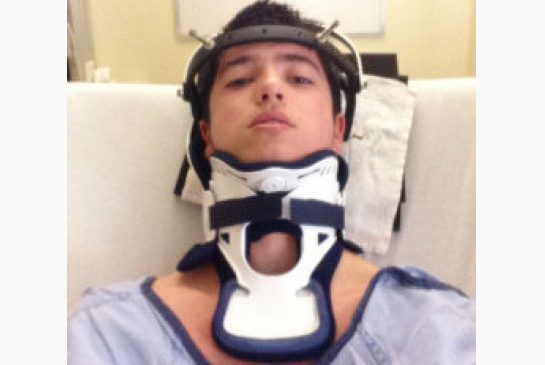
I had an injury yesterday playing baseball I ran into another player. I don’t really remember what happened.  I was told I hit my head on his chin and on the way down, my chin hit his knee, and then hit my head on the ground. I was knocked out. When I woke,  I didn’t know what happened and could not move or talk for about a minute.  Then, when I went to get up, my legs collapsed.   So I went to the emergency room for  a CT scan.  No bleeding to the brain,  but had an extreme headache.  Now the next day,  head still hurts and my neck is sore but not as bad. the ER doc said everything looked fine, but could not really say if I have a concussion or not.  He said I have the “symptoms”.  I guess my question is,  when should I go back to work?  The doc only took me off for a day but I am still in pain.

Hello J—-,

Concussions can be very tricky. They may not show up on CT or Xray and you can really feel lousy for a while after the initial accident. If you don’t feel capable of returning to work, it’s always best to allow your body the ample time required to heal prior to putting your body back in a stressful situation. However, that’s the perfect case scenario. It’s pretty common that those of us who work, may have to return to work prior to feeling 100%. If this is the case and you cannot get your doctor to write a letter for additional recovery days for your employer, make sure you watch your signs and symptoms and listen to your body. If you become dizzy, nauseated, develop a headache etc., these can lingering signs of a concussion but may not be serious enough for you to be hospitalized. But if you handle heavy equipment or must be at your best to stay safe, keep others safe, or do the level of job required of you, this should probably be communicated to your professional health care provider and see if an extra bit of recovery time could be allowed.

It’s never any fun getting a “Konk On The Melon” and even less fun dealing with the lingering side effects while duty is calling the patient back to work.

Keep an eye on your symptoms and as most any health care provider would tell you, if your symptoms worsen, you become more painful and not less painful over time, if you have numbness, tingling, have a seizure, headache increases, get more dizzy not less dizzy or have a decreased level of consciousness, 911 should be called and you should be seen in the Emergency Room.

Other wise, if the symptoms don’t get worse but get better though are still lingering a few days, it may be within normal recovery expectations and you simply need to take it easy and allow yourself to recover.  If you are ever in doubt, don’t hesitate to contact your medical professional and let them know what your symptoms are and see if they want to reassess the situation.

I found a well laid out guideline for definitions and signs and symptoms from a website and I’ll pass the information on to you along with the link for credit to the referenced website.
www.centerforbrainhealth.net

Sports Concussion

It’s more than just a bump on the head

MYTHS about sports concussion…

1. Concussion is a minor brain injury with no long-term effects

2. If you weren’t knocked out, then you didn’t have a concussion

3. Having multiple concussions is common in sports and no cause for concern

4. Symptoms of a sports concussion will always clear up, usually in a few days

5. If there’s no visible injury, everything’s okay

6. You should play through the pain—get back in the game!

FACTS about sports concussion…

1. Twenty percent of all concussions are sports-related

2. A concussion doesn’t always knock you out

3. Having one concussion increases your chances of having another

4. Symptoms of a concussion can last hours, days, weeks, months, or indefinitely

5. Concussion can cause disability affecting school, work, and social life

6. Returning to contact or collision sports before you have completely recovered from a concussion may lead to more serious injury and can increase your chances of long-term problems

What is a concussion?

Concussion is a mild traumatic brain injury that occurs when a blow or jolt to the head disrupts the normal functioning of the brain. Some athletes lose consciousness after a concussion but others are just dazed or confused. Concussion is usually caused by a blow to the head, but can also occur due to whiplash.

How can you tell when an athlete or person gets a concussion?

Sometimes, but not always, the athlete will be knocked out. In cases where there is no obvious loss of consciousness, the athlete may appear to be confused or disoriented (such as running in the wrong direction), and may not remember things that happened before or after the concussion, such as what period it is or the score of the game. Often, the athlete will describe some symptoms of a concussion, such as headache, dizziness, nausea, or blurred vision. It is also common for athletes to describe feeling “fuzzy” or “foggy” after concussion, and to have problems with balance or coordination. For this reason, and also because symptoms can sometimes worsen rather than improve, careful observation of the athlete after concussion is especially important.

What is post-concussion syndrome?

Post-concussion syndrome is a term that describes the physical, cognitive, and emotional symptoms that are caused by concussion and which can last for a varying amount of time after injury. Some symptoms show up right away, but others may not appear or be noticed until the next day or even later. Likewise, some symptoms might resolve fairly quickly, but others—especially fatigue—can persist much longer. The number and severity of symptoms, the speed of recovery, and the impact of symptoms on day-to-day functioning will be different for each athlete.

Physical Symptoms…

* headache
* neck pain
* nausea
* lack of energy and constantly feeling physically and mentally tired
* dizziness, light-headedness, and a loss of balance
* blurred or double vision and sensitivity to light
* increased sensitivity to sounds
* ringing in the ears
* loss of sense of taste and smell
* change in sleep pattern especially waking up a lot at night

Social and Emotional Symptoms…

* mood changes including irritability, anxiousness, and tearfulness
* decreased motivation
* easily overwhelmed
* more impulsive and disinhibited
* withdrawn and wanting to avoid social situations

Cognitive Symptoms…

* feeling ‘dazed’ or ‘foggy’
* difficulty concentrating and paying attention
* trouble with learning and memory (especially for recent events)
* problems with word-finding and putting thoughts into words
* easily confused and loses track of things
* slower in thinking, acting, reading, and speaking
* easily distracted
* trouble doing more than one thing at a time
* lack of organization in everyday tasks

How long does it take to get better?

Most people do recover completely from a concussion, usually in a matter of days. However, it can take up to a year or longer for some athletes to recover, and in some cases the symptoms won’t go away. Recovery may be slower in those who have already had one or more concussions, and in those who have a history of learning disability or attention disorder.

When it is safe to return to play after concussion?

There are several guidelines for return to work/play after concussion.  All of these share some common principles:

1. An athlete who has suffered a concussion should be removed from competition immediately and monitored for post-concussion symptoms

2. An athlete should not return to play before he or she is completely symptom-free at rest and after exertion for a specified period of time, which varies based on the athlete’s history and the severity of the concussion.

3. Athletes who have a history of one or more previous concussions should be treated more cautiously (not returned to play as quickly) than those who have suffered their first concussion

4. When in doubt, sit them out!

How can you tell when an athlete is symptom free?

An athlete should only return to competition when it is clear that there are no lingering symptoms of concussion. Unfortunately, because concussion is an invisible injury, and because athletes may minimize or not recognize persistent post-concussion, symptoms, this can be a tricky matter. Also, symptoms may sometimes go away, only to come back after physical or mental exertion.

Most often, return to play decisions are made without the benefit of neuropsychological testing and are based on observation and player report of symptoms. Neuropsychological testing provides the coach or team physician with information that can help to take the guesswork out of concussion management and return-to-play decisions. Using a battery of tests of memory, reaction time & processing speed, we can provide specific information regarding the severity of injury and a standard for evaluating recovery from injury. It is of benefit for athletes to receive baseline assessment prior to or at the beginning of the athletic season to allow for within-subjects analysis of scores following an injury.

I hope this helps J—- and I hope you feel better real soon.

Thanks for the question.

Best Wishes,

Roy, RoyOnRescue.com
royonrescue@gmail.com

Share

Riding and Push Lawnmower Safety!

Posted on May 18th, 2011 by Roy Shaw

Have you ever been surprised by how fast a child can be in one place and the next time you turn around they are in another?  Have you ever been shocked by how fast an accident can happen?  In this episode, I address lawn mower safety as a result of a terrible tragedy where a 5 year old girl was hit and then run over by a riding lawn mower. It is unknown as to the exact details leading up to this horrific accident or what the abnormal conditions may have been that caused this to happen.  The little girl was pronounced dead on scene. There was nothing related to first aid that would have helped her but I have to think that being more sensitive to prevention may be able to save future lives.   I pray for a miraculous Grace and healing to be given to the surviving family members of this little girl and I hope to remind us all of some ways to ensure this doesn’t happen.

May God bless and heal this family.

Roy, RoyOnRescue.com

Link To News Story:

RoyOnRescue.com


Share

Get This Car Off My Chest!

Posted on April 14th, 2011 by Roy Shaw

In this episode of RoyOnRescue, Roy received a question from an EMT student who was trying to learn more about traumatic asphyxiation. The EMT student wanted more information about this traumatic injury. Many times these injuries happen as a result of a very heavy object dropping onto a persons chest and trapping the person under it’s weight. It’s important to recognize the emergency and take action right away. You won’t want to miss this episode of RoyOnRescue.

Share

16 Year Old Dies Suddenly On Basketball Court!

Posted on March 4th, 2011 by Roy Shaw

In this episode, Roy talks about a terrible tragedy where a 16 year old athlete made the winning shot, was greeted by teammates on the basketball court and suddenly collapsed in sudden cardiac arrest. Later it is revealed that the young man had a not so un-common condition. Learn how to recognize symptoms surrounding this condition, how to respond to an emergency that arises from this condition and how to detect it before it may be too late.
Our hearts go out to the family and friends of this young man. May God bless and comfort them all.

RoyOnRescue Team
royonrescue@gmail.com

Share

What’s an AED?

Posted on March 2nd, 2011 by Roy Shaw

In this episode of RoyOnRescue, I answer a question from a viewer who asked me to explain what an AED is. The area of cardiology is an extremely interesting subject and electrical therapies are really fun to explain but how to do it in a short amount of time? I thought I’d give it a try and explain how AED’s work and how they can help a heart beat normally again all in a fraction of the time I usually take to explain it. I hope it makes sense and sheds a bit of light on the life saving gift called an AED.

Be sure to keep the questions coming and send them to:
royonrescue@gmail.com

Best wishes and keep on rescuing!

Roy

Share

How To Survive a Flash Flood

Posted on February 18th, 2011 by Roy Shaw

Ahhh…Spring is in the air. What a lovely time of year. The air becomes warmer, birds begin singing and the snow begins to melt. Now, just add some strong spring rains and…you’ve got floods! Right now, the National Weather Service has issued flood warnings for the North Central U.S. In this episode of RoyOnRescue, we take a look at flash floods, how to be on guard and how to survive one if you are ever caught off guard.
Don’t miss this episode of RoyOnRescue and get ready to be safe and help others be safe that might be at risk for flash flood emergencies.

Best Wishes,
Roy, RoyOnRescue
royonrescue@gmail.com

Share

How Do I Know If It’s A Fracture or A Sprain?

Posted on February 11th, 2011 by Roy Shaw

Hello Again,

A great question came in about how to tell if an injury is a fracture or a sprain or strain. This is a great question. In some cases it’s very easy to tell that a fracture is present. Like… bone sticking out of the skin! But if it’s not and there isn’t any deformity, it can be tricky. Check out this video blog for a more in-depth look on how to tell if the injury is something that needs medical attention or if it’s minor and can be managed right at home.

To read a bit more about the specifics, feel free to browse this link.
Fractures Vs. Sprains and Strains

Best Wishes,

Roy, RoyOnRescue.com


royonrescue@gmail.com

Share

Staying Safe In the Winter Storm of 2011!

Posted on February 1st, 2011 by Roy Shaw

Hello Everyone,

Most of us know what to do to prepare for a bad winter storm, but because we all can use reminders from time to time, I thought I’d post a video blog that just highlights some of the things to think about.  From generators to alternative heat sources, driving safety measures to foods that are easy to store, to ways to safely remove snow from our roofs, this video blog tries to highlight some important things to remember while weathering a winter storm.

Hope it helps in time.

Best Wishes,

Roy, RoyOnRescue.com

Share

Isn’t “Not Breathing Normally” Still Breathing? Maybe Not.

Posted on January 28th, 2011 by Roy Shaw

Hello Everyone,

I had a great comment come through the student comment section this week and thought it might help others if I shared my response.

So, the student asked,
” Some questions on your test seemed to give incomplete or misleading information, in my opinion. Such as the one referring to a man who is unresponsive and not breathing normally. The answer to pass was to give them 30 chest compressions yet if someone is not breathing NORMALLY it leads me to believe that they are breathing and the first thing I would want to do is try and figure out why the breathing is not normal. Not give them chest compressions. Have I checked for a heartbeat? I wouldn’t give chest compressions unless I couldn’t detect a pulse.”
-ProFirstAid.com Student

Here was my response. I hope it helps.

Dear “Student”,

There were a couple of changes in this 2010 ECC/ILCOR and American Heart Association release from the guidelines of 2005. One was that if the person is unresponsive and not breathing “normally” we begin chest compressions. Pretty aggressive I know but this is what the guidelines suggest as best practice. Secondly, basic first aid providers no longer check for pulses in the unresponsive victim. Now, when a lay-rescuer comes upon a person who is unconscious, not breathing or not breathing “normally”, they are to activate EMS(call 911) and begin chest compressions at a rate of at least 100 per minute and at least 2 inches deep. This is to continue for 30 compressions only interrupted long enough to give two full breaths after the head tilt chin lift and then back to the chest compressions. The rescuer is not to stop this process unless the patient begins to respond and become conscious, begins breathing normally again, an AED is available, or if EMS arrives and takes over. CPR is to be provided fast and hard with as few interruptions as possible. So there you have it as stated by the new and latest ECC/ILCOR guidelines.

Now, for my subjective slant on the whole deal. I say, don’t feel bad if you’re a little frustrated. As a licensed paramedic, instructor trainer for CPR, First Aid, ACLS and PALS, it still a bit hard for me to watch the latest recommendations and guidelines put forth by the International Liaison Committee On Resuscitation”. It was hard to watch them throw the proverbial “baby out with the bath water” if you will. I for one believe that people can learn how to perform effective and more advanced assessment if given the correct learning mechanisms by which to learn and retain the information in order to use it well during a real rescue situation. I believe that people are more than capable of providing optimal CPR and First Aid which would include pulse checks. I think that there can be times, though maybe rare, where checking for pulses would be helpful in determining the correct next steps especially when dealing with patients suffering from low blood sugar, or a hard hit to the head which temporarily knocks them unconscious and they stop breathing for some time. I also wonder about the person who has been in cardiac arrest for some time. The person is certainly permanently dead and any resuscitation efforts will not change the patients status because they’ve been dead for more than half an hour or longer. Does the rescuer still perform CPR and Rescue Breathing because the person is not moving, not breathing or not breathing normally? Very difficult for me to believe that a rescuer would have to perform CPR on a person with rigor mortis while waiting for the EMS providers to arrive and confirm time of death.

But, the ECC/ILCOR recommendations were based on some evidence, though from my findings I admit not much, that more people would benefit from these simplified procedures than would suffer any ill consequence. So they made the change.

What helps me to deal with the changes when I don’t agree with them, is that the changes were made by the ILCOR group to “simplify” the procedures of CPR and to hopefully encourage more people trained or not, to get involved and hopefully make a difference in saving more lives. If this is indeed the case and we’ll know in a few years, than I guess it’s worth the bit of frustration that some of us must suffer.

I hope this helped. Please let me know if you have any further questions.

Best Wishes,

Roy
royonrescue@gmail.com

Share

Professional Rescuers and The Good Samaritan Law

Posted on December 30th, 2010 by Roy Shaw

In this episode of RoyOnRescue, a newly licensed Medical First Responder asked if they might be at a higher risk when they try to help a citizen now that they are licensed.  Though this can be a scary and ever present problem in the world of professional medicine, it’s very rare for anyone to get sued or especially lose a lawsuit when it comes to helping people who have medical needs.  In this episode, Roy sheds some light on how most Good Samaritan Laws work and how any rescuer regardless of their level of training and license can help others while staying well within the guidelines of the Good Samaritan Law.

Best Wishes and a Blessed New Year From Roy and The Whole RoyOnRescue Team!

Minnesota Good Samaritan Law

Share

Copyright © 2010 Roy on Rescue. Theme by THAT Agency and modified by ProCPR.