I received an email that asked several questions regarding events leading up to a cardiac arrest and then how to manage feelings of failure after CPR is given but the person still remains dead. I hope this helps.
Category Archives: CPR for Providers
How To Process Feelings Of Guilt When CPR Doesn’t Work
I received an email from a person who provided CPR to their father but unfortunately, their father did not respond to the CPR and remained dead. The child who provided CPR to them is now dealing with incredible feelings of failure and guilt. They feel as though they failed their father. They feel as though they did not help enough. They are sad, but they also feel responsible that their loved one is gone.
I knew I had to respond to this as soon as possible so I recorded a direct message to them in hopes that it can help them understand that they did everything right and what’s more…they showed a wonderful act of love to their father. I hope this helps them but I also hope it helps others who are suffering from the same or similar feelings. Peace Be With You.
Guess What Movie Star Put Their CPR Skills To Use!
Tens of thousands of people are trained in life saving CPR every year. But sometimes it’s easy to forget that CPR is not just for health care providers and in the case of an emergency, you never know just who might be happening by. In this case, it was famous actor, Dustin Hoffman! You may know him from some of his better known movies such as Rain Man, Tootsie, Hook and of recent, Kung Fu Panda. I included the video that interviewed to two medics who interacted with Mr. Hoffman on scene and they tell the story. Thought you might find it interesting.
I Administered CPR To My Neighbor, But It Didn’t Work!
I received an email from a true rescuer who attempted to revive their neighbor by administering CPR. The neighbor did not survive  and now the rescuer is feeling as though the may not have done enough to help. This is a very normal feeling for many rescuers. I’d like to share my thoughts and I hope it helps bring closure, confidence and peace.
Much Peace,
THE FOLLOWING IS MY RESPONSE:
Hello Lynn,
It sounds like you’ve had a rough couple of days. First, because a neighbor and potentially their friends and family members are experiencing a living nightmare right now and secondly, because you may be feeling like you did not do enough, or do it well enough.
These feelings are very normal and not because you did anything wrong. It’s just normal to feel sad that the situation did not turn out the way we would have wanted it to. The fact that you did any CPR at all means that you gave this gentleman a chance at survival. Please remember, CPR is not designed to save lives directly. It’s purpose is to slow the process of moving from clinical death to biological death down a little in order to possibly intervene with advanced life support and buy more time to get the person to the hospital. CPR can sometimes help the body respond to the medications and electrical therapy but it does not take away the reason the person went into cardiac arrest in the first place in most cases. There can be so many reasons why a patient goes into cardiac arrest and why the seemingly don’t respond. It’s important to remember that your neighbor was already clinically dead when you arrived by their side. You gave them and their family members a wonderful gift. You moved out of your comfort zone and gave this person a second chance at survival. Something they wouldn’t have had if you wouldn’t have tried. The fact that your neighbor did not survive cardiac arrest does not take anything away from your efforts and your compassion.
You acted bravely and selflessly. That is not the norm in our culture. You are the exception and I say well done! Please, be at peace knowing that the most experienced and effective rescuers don’t always achieve the outcome that others wish would happen. True rescuers try their best to make a possibility for a tomorrow, regardless of the outcome and make the world a more loving place and show the world compassion by doing so.
Be at peace knowing that you did a wonderful act of love and compassion.
Most sincerely,
-Roy
A Response To A Rescuer Who’s Attempts To Revive Her Father Were Unsuccessful
Dear Rescue Fans,
I received yet another loving email from a person who’s father died in the front of their automobile while they were driving them to the hospital. Due to things outside her control, she was unable to move her dad to the ground so she improvised and did CPR while he was reclined in t he car the best she could. She has struggled for some time with this and found some relief from my episode on “Did I Do CPR Wrong?”.
I just replied back to her and I have to believe there may be others who have tried to save a life with CPR and felt it was not successful. So I’m going to include my reply to her in this blog entry and for those of you who are suffering, I hope it helps.
This person said in her last paragraph of her email: “I have struggled with this in so many ways, yet feel comfort in being with him when he left. I have struggled to find any material that related to my experience. I have felt isolated in not being able to share how I lost my dad, This story, the words you have written, have helped me process and understand my own experience. Thank you.”
This was my response:
Dear __________,
I’m so very sorry for the loss of your Father. I’m sure this must have been most traumatic for both you and your mother. I want to re-ensure you that what you did for your dad that day, was the most brave and loving gift you could have given both your dad and your mum. Every thing you did sounds perfect in order to give your dad the best chance of survival possible under the circumstances. The fact that he did not survive the event does not have anything to do with your efforts. Remember, CPR is only a time buyer in case the person is going to respond to medications and advanced medicine. It’s not a guarantee. The fact that you had the courage to try and the compassion to help is amazing. Please let your mother know that her reaction to the situation is also very normal. She lost the love of her life. Her soul mate and her husband. It’s a nightmare that is happening for real, right before her eyes and it’s not wrong for her to be so overwhelmed with grief and fear that she could not help. That’s why paramedics are not called to their own homes for emergencies. It’s too emotional. So please, let your mother know that she is not at fault for her reactions either.
I hope and pray that you will receive peace during this time of healing. But please know that everyone has a day to die and it’s never easy to experience it. CPR just keeps the window of opportunity to survive open a little longer. You gave that to your dad. As a father myself, I can only imagine how I’d feel to know that my daughter loved me so much that she would give me CPR while waiting for the ambulance to arrive. What love.
Be at Peace,
-Roy
P.S. I’ve included the video that explains this message in detail. I recorded it so long ago, it’s hard to find so I’m going to bring it back to the top. Share it with anyone you may know who may benefit from it.
What If The Person Is Choking and Is Pregnant?
Hi Rescue Fans!
Got a good question via email today regarding the choking adult scenario. This rescuer asked if we could explain the following: “Please talk about how to give a pregnant woman chest compressions if she was choking. How would we hold her? With an infant we make sure the head is below the body. But what to do for a pregnant woman who is choking? -H____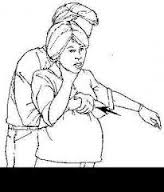
I thought this was a good question and one that we cover in our CPR certification course. Feel free to view it below. At about 44 seconds into the training, I talk about what to do if the person has a distended abdomen that’s too large to reach around, or they are a pregnant person. I hope this helps!
What Do I Tell My Friend To Do If They Have An Asthma Attack?
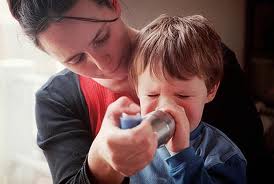
This question came in via RoyOnRescue email. They asked, what should I tell my friend to do if they have an asthma attack?
Here’s my answer. I hope it helps.
 Hi S,
Hi S,Asthma stinks! But what’s worse is when we have an attack. There’s no better treatment than management to prevent an attack. Avoiding triggers, maintaining regular preventative medications and always having a rescue inhaler available that is not expired and not empty. If a person is having signs of an attack, it’s never a bad idea to call 911 and then begin to treat the symptoms with their medications. If the attack ends, becomes manageable and everything is fine, then the ambulance leaves and there’s no problem. If the attack is persistent and the medications don’t work, one will never regret having called for EMS backup. Remember, you can always send them away, but we can never make up for lost time.
If a person is having trouble with their asthma(wheezes in or out or both, short of breath, tightness, having small attacks, more albuterol use than normal, has congestion or feels like their not able to move as much air(maybe they have a peakflow meter and it’s reading lower than normal) they should call their doctor. Again, if they’re having an attack, call 911. Don’t rely on home remedies and cold air. Hope this helps.
Roy
Can A Person Be Struck By Lightning On A Porch?
In this episode, we take a look at what areas are safe to watch a thunderstorm from. A question was asked about the safety of watching lightning from under a porch attached to a house. They wondered if it was grounded just like the porch. After researching a bit, I found that it is no more safe than being in a tent, a shed, or under a tree. Take a look at this vlog and find out why it’s not safe to be outside when you hear the roar of thunder.
Fellow Workers Credited For Saving Co-Workers Life With CPR
This video covers a story of how a person’s life is saved because others cared enough to try CPR. Watch this video and be encouraged that you never know when you may need to use CPR skills. If you want to learn CPR today, go to www.profirstaid.com and click on the training tab at the top of the site. Then watch the videos for free, and learn what to do in case of an emergency. It really can make a difference! It did in this person’s life.
Keep On Rescuing,
Roy
Nurse Doesn’t Give CPR To Elderly Resident, Did She Do Something Wrong?
Hello Rescue Fans,
Today I was made aware of a story that is on fire with debate. Should CPR have been given to the elderly person or not? Should the RN be charged? Should the family sue the “Nursing Home?” actually independent living residence. How does the blah blah blah association feel about this? How does the National Board of Registered Nurses feel about this? On and on and on! What I can’t believe is why everyone is blaming a non medical facility, which has pre-aranged agreements with it’s residents that don’t want any CPR for calling 911 and then simply doing what the resident and the management agreed to do? Okay, so there wasn’t an actual DNR(Do Not Resuscitate) which can lead to a lot of miscommunication and ambiguity…I give you that but come on, guilty of neglect? Charged for not administering CPR? I know what you’re thinking right now. Roy has flipped his lid! Here he is, the RoyOnRescue host that is always talking about how we should get involved in order to try and save a life and now he’s sticking up for this non-caring facility that let this “poor” women die!
You’re right, I am all about saving lives when they can be saved, but I’m also all about death with dignity when the time is right and it’s in line with the wishes of the patient themselves. What’s more is that this debate is not about the wishes of the patient, which has already been confirmed by deceased family members, this is about a 911 dispatcher who thought that the person at the end of the phone should care enough to begin CPR, regardless of the rules and regulations by which the employee was mandated to follow. Yes, the caller should probably not have said that they were a nurse which could be interpreted as a skilled nursing center instead of an independent retirement community. Yes, the nurse and the dispatcher could have been more calm while explaining that the patients wishes were for no resuscitation and that the community agrees to no resuscitation prior to living in that facility. But in the end, the mainstream media has gotten wind of this story and blown it way, way out of proportion. I’ve dealt with so many of these calls that I predicted what the problem was before I even read the story. And after reading not one, but many accounts, found that it was just as I thought. In short, lack of communication, lack of paperwork and lack of privacy. You put all those together and what do you get? A hot story that takes off like a wild fire! Watch the video for my thoughts and then give me your feedback. Especially if you disagree. I love a good debate.