Roy on Rescue

Roy on Rescue

Hello Rescuers!

I just received a question via our ProCPR customer feedback that read: PPE
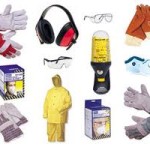
Dear ProCPR, “Question 16 says you have on PPE (personal protective equipment)  already, then you check for
responsiveness. Why would you put on your PPE before you check consciousness?

- Anthony

In case anyone else may have asked the same question I though I’d address it.  First, Question 16 is the number this person was on while taking the ProCPR.org test.  This is the online portion of the Health Care Provider level BLS certification training in case anyone was wondering.

Okay,  now for the answer.  As professional health care providers, we should always be thinking about cross contamination.  We don’t want to catch what the patient may have and we don’t want to give the patient anything that we may have!  Remember, PPE works both ways.  Can anyone say, nosocomial infection?  Even if the patient isn’t in obvious distress or obviously infectious, we should be thinking about the fact that the person seems to be in need and may require medical treatment.  This means that we may need gloves, CPR shield with one way barrier, goggles, face mask, respiratory protection etc.   This is why it’s so important to think about PPE  whenever we encounter a situation that may call us into action.  Not just when the person is unconscious or not breathing.

Forever, I’ve battled the problem with health care professionals short cutting PPE while giving care or even thinking about care.  We really do need to consider the two way protective properties related to infection control as it relates to appropriate personal protective equipment.

When it comes to layperson rescue, one of the top five reasons that laypeople will not intervene when a person is in distress is the fear of disease!  If the rescuer is approaching a victim and dons their gloves early as well as ensures that they have a CPR shield available, the fear of catching a disease is greatly diminished.  This will  increase the chances that the Good Samaritan may actually get physically involved in the rescue.

Now I know what you may be thinking…”Roy!  Do you really think that I’ll have one of those rescue kits on by belt all the time?  You may be a “Rescue Hero” type but the feasibility of me having PPE on my person when I’m at the beach, shopping, walking, vacationing, or even at a business meeting is slim to none.”  Well, I have to agree!  Unless you are a professional rescuer on duty, you probably won’t have your jump kit, glove pouch or a one way valve mask bag swinging from your belt loop.  So how will you have the PPE you need at the time you need it?  The best way I’ve found is to have a key ring rescue kit.  The catch is having it be small enough to not get in the way and large enough to carry your gloves and a one way CPR shield.  The reason I say a Key Ring style, is that I think that keys are the one item that most people have with them most of the time.  If they don’t have them with them, then they are usually close at hand.  And if we have our keys, we’ll at least have gloves and a CPR shield.   So make sure you get one and then the PPE problem is out of the way.  Still don’t think that PPE is needed?   Well, that’s why the AHA endorses “hands only” CPR!  It’s really not that compression only CPR is better than full Cardio PULMONARY resuscitation, it’s that there are so many non PPE toting people afraid that they may catch a disease if they do mouth to mouth rescue breaths that we had to design a new form of  bystander CPR.  Since implementing  “Hands only” CPR, there has been an increase in rescuer involvement.  And when people get involved and provide CPR, lives are saved!

PPE should be on every rescuer’s mind…and key chain, lay or professional and when we begin to think about PPE as the first step in rescue, lives are saved and infection is prevented more often!

Hope this helps.

Share

Question: Why Dont We Check ABC’s Anymore?

Posted on January 14th, 2013 by Roy Shaw

In this blog,

20130114-192805.jpg
I answer a question that came in about why we don’t teach lay rescuers to check for pulses after AED shock. This student thought that we were trying to trick them but in reality, the new standards are what may be tricky. Here’s my answer, I hope it helps.

Hi Shelley,

Thank you for taking the time to comment about the training. I’m writing In regards to your question about AED use and then checking for “signs of life” vs checking for Airway, Breathing and Circulation. Id like to assure you that as wrong as it may seem to do CPR without checking for pulses first, the training you received from ProFirstAid.comis based upon the latest guidelines set forth by the American Heart Association and are correct.

The old standards were to shock with AED Training and then assess for Airway, Breathing and Circulation, if no pulse give CPR. The new standards have eliminated pulse checks for lay rescuers in order to simplify and hopefully reduce pulse check “mistakes”. This is designed to shorten time from arrival of help to first chest compression.

Now, if your feeling a little confused, don’t feel bad… many of us do when there are changes. Be assured that most people who are unconscious, not breathing normally and have received a shock are most probably in cardiac arrest and CPR is called for. Besides, studies show that chest compressions when not needed rarely ever cause severe harm. Better to error on the side if giving CPR.

This however, is the reason for change in training and per the AHA standards it is accurate.

I’d be happy to explain further and in more details if you like.

Best Wishes,

Roy Shaw, paramedic, instructor
ProTrainings.com

Share

Tribute To Rescue And Survival

Posted on July 6th, 2012 by Roy Shaw

In this episode, I wanted to take a moment to focus on the success of rescue attempts. Though it’s no guarantee that anyone will survive no matter how hard we try to save their lives, from time to time…they do.

And this is a video that celebrates survival. Don’t forget to celebrate the caring enough to try, no matter what the outcome too.
Cheers,

Roy

Share

Can Anyone Use An AED?

Posted on February 27th, 2012 by Roy Shaw

In this mobile vlog, Roy wanted to address the AED question asked by two different people at almost the same time. Though there may be slightly different legal rules in the U.K. Compared to the U.S., both countries follow closely related ILCOR recommendations/guidelines. Always check your local laws to be sure, but in this episode, Roy addresses what the 2010 guidelines changed and why you can probably use an AED without any formal training. Let him know what you think of his more mobile format. He’s trying a new app that would allow him to record and post from almost anywhere and anytime. Not as finished as the in-studio videos but let’s him be more efficient. He will use the other format too but will sneak in some simpler ones when time is crunched. Your comments will be appreciated. Send comments to: royonrescue@gmail.com.

The RoyOnRescue Team


Share

Part 2 How To Survive In The Wild…A Follow Up To Comments

Posted on October 13th, 2011 by Roy Shaw

There was such a great response from the last episode covering life threatening emergencies in the wild, Roy decided to record a “Part 2″ response that expounds on a couple of the comments.
Are there any medications that may save a heart attack victim’s life in the wild? and, If I’m asthmatic, is there any thing I can do to increase my chances if I’m away from civilization. Be sure to watch this follow up episode to put the pieces together on how to survive in the wild.

So, don’t stop having fun and living life to the fullest, but if you’re going to go out into the wild, make sure you’ve got a game plan for surviving unexpected events.

Share

Get This Car Off My Chest!

Posted on April 14th, 2011 by Roy Shaw

In this episode of RoyOnRescue, Roy received a question from an EMT student who was trying to learn more about traumatic asphyxiation. The EMT student wanted more information about this traumatic injury. Many times these injuries happen as a result of a very heavy object dropping onto a persons chest and trapping the person under it’s weight. It’s important to recognize the emergency and take action right away. You won’t want to miss this episode of RoyOnRescue.

Share

Allergic Reaction and No Epi Pen!

Posted on March 8th, 2011 by Roy Shaw

I received another email from a person asking: “What are basic first aid measures for a serious allergic reaction if there is no epi pen available? I watched your training video in your library at ProFirstAid.com but I can’t seem to find an answer.”

Thanks for your answer,
C

Thanks for the question C. I thought this was a good question and a situation which no one wants to find themselves. So I decided to reply back and include it into the RoyOnRescue.com blog response. I hope it helps.

Here’s my reply:

Dear C,

Other than immediately calling EMS/911, if at all possible, let the person rest in position of comfort.
Some of the things that are indicated for first aid providers are:

1. Watch for signs and symptoms of severe allergic reactions like difficulty breathing, itching, hives, swelling, sore throat, anxiety.

2. Remove victim from anything that would aggravate or worsen the symptoms.

3. Give supportive care like rescue breathing, CPR, shock treatment etc when indicated.

4. If at all possible, identify what it is that gave the person their serious allergic reaction and avoid any further exposure to it.

This is not a prescription but simply something that I would do. I always like to have liquid diphenhydramine(Benadryl like antihistimine) on hand that can be taken as prescribed on the container or per doctors order. If I did not have a prescription for a “rescue inhaler” like albuterol or didn’t have an allergy response kit prescribed and filled from my doctor I would really emphasize doing so, and then keeping it up to date as the epi pen and other medications could expire and be useless.

Remember, recognizing the early signs of an allergic reaction and activating EMS/911 as soon as possible is critical. Time is of the essence. Oh! And if you think you may have an allergy, or have ever had a severe allergic reaction, you should be sure to contact your medical professional and get a filled prescription for an emergency allergic reaction kit, AKA: bee sting kit.

I hope this helps, and best wishes.

Roy

Liquid Antihistimine Benadryl

Share

Follow Up Comment to Chest Injuries and CPR

Posted on March 8th, 2011 by Roy Shaw

I received a question from a person who after watching the “Chest Injuries and CPR” video blog asked:

Dear Roy,
Reading your letter, I would agree if the injury is just soft tissue injury. However if a # is suspected, It would be dangerous to do CPR as the # might or will puncture the lungs and cause immediate death, if immediate intervention is not available.
Kindly comment.

Bent Steering Wheel From Drivers Body

Here is my response:

Hello,

Regarding your question about Chest Injuries and CPR. It’s important to make a distinguishing point whenever we talk about CPR. When a person is in need of CPR, it means that the person is in cardiac arrest. This is to say that they are unconscious, not moving, not breathing normally. If this is the case, they are presumably in cardiac arrest or in a state that justifies Cardio Pulmonary Resuscitation.

If the person needs CPR, this means that they are clinically dead. If the victim does not receive CPR, they will simply graduate to permanent death otherwise known as biological death(permanent).

This is why, regardless of the chest injury, if the person is “dead” or in need of CPR, compressions are to be given per the American Heart Association guidelines even if the complications could include those of punctured lungs, lacerated organs, or bruised/punctured heart muscle. This would be based on the theory that a person in need of CPR is already dead and will not be harmed more even if there are negative side effects from providing chest compressions. If a person remains dead, surgery is not an option but if the person is resuscitated with CPR, and alive at the hospital, we have an opportunity to fix the injuries that may have been aggravated by doing CPR.
If however, the person is awake, is breathing normally and therefore does not appear to need CPR, it would be correct that chest compressions and CPR may complicate the already damaged chest and complicate the victims injuries. As soon as the victim becomes unconscious, is not breathing normally and now appears to need CPR, Emergency Services would be contacted and CPR would be initiated regardless of the injuries of the patient.

I appreciate the question and hope that this clarifies any confusion caused by the article. Please don’t hesitate to email me again if you would like to continue dialogue on this subject.

Best Wishes,

Roy Shaw, RoyOnRescue.com
royonrescue@gmail.com

Share

RoyOnRescue Personal Message to Rescue Three Team

Posted on May 4th, 2010 by Roy Shaw

Hello Rescue Three and everyone who volunteers in order to form a life saving team of rescuers for the racers of the California high desert region.   I wanted to send a video reply to tell all of you how proud I am of your commitment to the racers and the welfare of everyone who participates in off-road sports.  It sounds like your team was founded back around 1976 and I’m sure that the founders are proud of the tradition you’re upholding.

I was made aware of your rescue team because of a question asked about Snake Bites and long response times due to rough terrain.   This was a great question and I believe that many other rescuers will benefit in some way from the information that was obtained by doing a blog on that topic.

In sending a video message reply in hopes that technology will bridge the distance gap and create a more face to face relationship for rescuers around the world.  I hope you find this video message a bit more personal and connecting.

Best wishes and keep up the great work.

Roy Shaw, EMT-Paramedic
RoyOnRescue.com

Rescue Three Team Picture

Share
x
Sign up for our Newsletter

Enter your email and stay on top of things,

Copyright © 2010 Roy on Rescue. Theme by THAT Agency and modified by ProCPR.